Wednesday, April 25, 2018

اعتراض امریکایی به گفتگوی سیاسی در نیویورک (اشاره به سفر ظریف )

Repercussions, good and bad, of scrapping the Iran deal

environmentIn May, President Trump will decide whether to rescind the nuclear deal with Iran, a prospect made more probable by the announcement of Ambassador John Bolton as National Security Advisor.  Much has been said about the Joint Comprehensive Plan of Action’s (JCPOA) fundamental flaws, chief among them its inability to prevent Iranian access to nuclear weapons. In contrast, it clearly achieved the mullahs’ goals of significant financial incentives, a certain level of legitimacy, and implicit security assurances. Which is why scrapping the deal would have important consequences for Iran’s domestic and regional policies. Here are five notable ways:
  1. As long as the nuclear deal with the P5+1 is in place, it is highly improbable that any party would act militarily to target Iran’s nuclear facilities. In fact, achieving that security assurance was the key motive for Iran’s change of gears on the nuclear issue, and return to the talks in 2011. But counterintuitive to Western optimism, these circumstances did not bolster regional peace or stability. Reassured of the improbability of any military option, Iran was emboldened and went on the offensive, stepping up its destabilizing regional interventions. Therefore, ending the nuclear deal would likely motivate Iran to give up its offensive mode in favor of a defensive posture.
  2. Reimplementing sanctions would adversely affect the mullahs financial and economic resources. Iran gained a vast amount of money as a result of the nuclear deal. Contrary to the dealmakers’ assumption, those resources were not used to improve the economic or industrial infrastructure or quality of life for the people of Iran. Instead, the regime used essentially all the money for fueling the regional conflicts in Syria, Yemen, Afghanistan, and elsewhere. Which explains the slogan heard nationwide during recent protests in Iran, “Let Syria alone, take care of the [Iranian] people!” In other words, denying Iran financial and economic incentives and reimplementing the sanctions, especially in conjunction with the lack of security assurances, would dramatically affect the regime’s capability to destabilize the region, without significantly impacting the Iranian people.
  3. A defensive regional mode means, most importantly, a fundamentally changed risk/benefit balance of active Iranian involvement in regional conflicts. The Iranian regime will need to recalculate the benefits of fueling the conflicts in Syria and Yemen, for example, in light of the potential risk of inciting a military confrontation with regional powers. Iran, most probably, will surrender its policy of export of crises, while trying to rally its base in Tehran and avoid direct military confrontation. For a regime standing on very shaky ground at home, this represents an existential threat.
  4. In a bid to offset the prospect of the US ending the nuclear deal, the mullahs have again trotted out the “hardliner-moderate” theatrics, whereby ending the nuclear deal, reimplementing sanctions, and increasing pressure on Iran helps the “hardliners” get the upper hand. Which is why the cast of characters again includes Ahmadinejad, notorious for his defiant and reckless nuclear policy.  Ahmadinejad’s political resurrection is intended to signal a shift to the “hardliner” mode. Nevertheless, given the lack of financial and economic resources, the increasingly obvious popular unrest at home, and lack of security assurances, Iran will undoubtedly need to continue in the “moderate” mode, despite any pretensions to the contrary.
  5. Ending the nuclear deal also deprives the regime of the unwarranted legitimacy and prestige offered by the P5+1 during the nuclear talks and afterwards. The international community under the leadership of the Obama administration treated the Iranian regime as a “normal” player with legitimate interests, who should be viewed as a partner in efforts to achieve regional peace and stability. That false picture abandoned dissidents in Iran, and facilitated the regime’s repression of the people by removing concerns about any Western reaction. Denying Iran’s rulers any unwarranted legitimacy changes the regime’s balance of power with the dissident majority and their organized resistance movement. The recent wave of nationwide protests removed all doubt that Iranians want nothing less than a regime change. The uprising also reaffirmed the pivotal role of the Mojahedin-e-Khalq (MEK) in transforming popular dissidence into an organized movement directed at the goals of freedom and democracy.
The Tehran regime has done nothing, before or since the nuclear deal, to warrant international credibility or prolonged patience. In contrast, Iran’s people and popular resistance movement have demonstrated their commitment to the sort of legitimate change that deserves recognition by the United States.

Sunday, February 4, 2018

يك فرمانده سپاه اعتراف ميكند كه زنان نقش مهمي در اعتراضات داشته اند


Call for the release of a number of active women arrested by RIGC for participating in the 2018 Uprising in Iran.


Iran became an Islamic republic in 1979 when the leadership of the anti-monarchy revolution was hijacked by Khomeini and clerics took the power.
Since the onset of the rule of the mullahs, the Iranian women have been severely suppressed by the Islamic regime.
Only one year after founding the so-called Islamic Republic, the women were forced to comply with the Dressing Code Issued by Mullahs, which was just one aspect of the sex discrimination under clerical rule.
At the beginning of 1978 Revolution, Iranian women were active in the scientific, social, economic and political arenas, but the Mullahs' laws restricted them. Many women were fired from jobs or imprisoned and tortured.
Among the supporters and members of the People's Mojahedin Organization of Iran (MEK\PMOI), there were myriad of the young women, students, and intellectuals, whose activities drove the misogynist mullahs mad. So the women were subjects of retaliation, torture, and assassination, specifically over the period of 1988 massacre of the political prisoners by the religious decree of Khomeini. Due to the massacre, more than 30.000 political prisoners went to gallows, including lots of women even mothers and pregnant women. Some of the survival women left Iran and joined the Iranian resistance, the National Council Resistance of Iran(NCRI). the political alternative of the Iranian regime which is led by Maryam Rajavi, as a Moslem woman who represents a tolerated interpretation of Islam with a progressive ten point Plan for the time after overthrowing the clerical dictatorship ruling Iran.    
Women in Iranian resistance, NCRI, are the source of motivation for oppressed women under the dominance of the tyranny regime ruling Iran. As it was clearly seen at the end of 2017 protests, the women were mostly at the front line of the protests and played a crucial role in guiding and organizing the nationwide uprising against the mullahs.
They also participate in the daily protests against the deteriorated economic condition the worsening livelihood situation in Iran.
The mullah’s regime feels a great danger of any protest movement by women in Iran because the women have been deprived of all their rights during the rule of the mullahs. They have great motivation and are very robust for retrieval their violated basic rights as the human. Now they are in line with protests and are opening new fronts against the vicious mullahs in Iran. They are also the source of inspiration for men to rise up to overthrow the fundamentalist regime in Iran to achieve democracy, justice, and equality and to make Iran a better place for the next generations.
#سبزوار #سيرجان #آبادان #ساري #سنندج #سمنان #ساوه #سيستان #سميرم #آمل  #انار #انديمشك #اصفهان #اروميه #اردبيل #آستارا #بهبهان #بوشهر #بابل #بلوچستان #بجنورد  
#بهشهر 
#جنبش_دادخواهی #سرپل_ذهاب #مرگ_بر_اصل_ولایت_فقیه #زنده_باد_ارتش_آزادی @massacre_67
#Unitedstates #Belgium #Germany #France #UnitedKingdom #Albania #Ukraine #FreeIran #Iran #MEK #MaryamRajavi #Ireland #Berezil #SaudiArabia  #Poland #Denmark #India 

Tuesday, November 28, 2017

دونالد ترامپ و امانوئل ماکرون بر مقابله با فعالیت‌های بی‌ثبات کننده رژیم ایران در سوریه تأکید کردند

کاخ سفید: دونالد ترامپ و امانوئل ماکرون بر مقابله با فعالیت‌های بی‌ثبات کننده رژیم ایران در سوریه تأکید کردند


.کاخ سفید: دونالد ترامپ و امانوئل ماکرون بر مقابله با فعالیت‌های بی‌ثبات کننده رژیم ایران در سوریه تأکید کردند


کاخ سفید روز دوشنبه 6آذر طی بیانیه‌یی از گفتگوی تلفنی رئیس‌جمهور آمریکا و فرانسه درباره نقش بی‌ثبات کننده رژیم ایران خبر داد.

در این بیانیه آمده است: «رئیس‌جمهور دونالد ترامپ روز دوشنبه با رئیس‌جمهور فرانسه امانوئل ماکرون صحبت کرد. روسای جمهور درباره اهمیت فرایند ژنو تحت نظر سازمان ملل‌متحد به‌عنوان تنها جایگاه مشروع برای حصول به راه‌حل سیاسی در سوریه توافق کردند. دو رئیس‌جمهور هم‌چنین بر نیاز به مقابله و به عقب راندن فعالیت‌های بی‌ثبات کننده رژیم ایران در سوریه تأکید کردند».
#شاهرود #چالوس #رشت #رفسنجان #رامسر #رودسر #رامهرمز #زنجان #قم #قزوين #قوچان #كرج #فسا #فومن #گچساران #جنبش_دادخواهی #مرگ_بر_اصل_ولایت_فقیه #زنده_باد_ارتش_آزادی #تابستان_67_كجا_بودي @massacre_67
#United states   #Belgium   #Germany #France #UnitedKingdom #Albania #UkraineFreeIran #Iran# 

مخالفت خامنه ای با دوچرخه سواری زنان در ایران

مخالفت خامنه ای با دوچرخه سواری زنان  در ایران


بار دیگرعلی خامنه ای ولی فقیه طلسم شکسته ارتجاع آخوندی با تأکید بر افکار پوسیده وقرون وسطایی وزن ستیز ویژه آخوندی، بار دیگر تأکیدات خود را درباره دوچرخه سواری زنان و فعالیت های اینترنتی در اینترنت تکرار کرد.وبا محرم ونامحرم کردن موضوع وفتوای چندرغازی وبه بهانه پاسخ دادن به سوالات 
.دینی، حرفش را به کرسی بنشاند


او گفت:صحبت کردن، اذیت کردن و خنده با جنس دیگر در فضای سایبری، چه در قالب متن،صدا و ویدئو یا حتی یک چیزی شبیه یا دنبالش فضای فاسد را ایجاد می .کند  مجاز نیست
  در پاسخ به سوال دیگری گفت:هر ارتباطی  در اینترنت را در رابطه با "ازدواج موقت" تعریف کرد و با توصیف شرایط برای ازدواج مطابقت داشته باشد مورد .تأئید اوست

خامنه ای مجددا تأکید کرد که "دوچرخه سواری زنان در مناطق عمومی و در مکان هایی که ممکن است توسط مردان عجیب و غریب دیده شود مجاز نیست." (خبرگزاری دولتی ایلنا - 26 نوامبر )
2017
#فومن #گچساران #جنبش_دادخواهی #مرگ_بر_اصل_ولایت_فقیه #زنده_باد_ارتش_آزادی #تابستان_67_كجا_بودي @massacre_67
#FreeIran #Iran #United states   #Belgium   #Germany #France #UnitedKingdom #Albania  #Ukraine

Wednesday, August 9, 2017

ANALYSIS: #IRGC bypass sanctions through Rouhani's 'smile diplomacy'

ANALYSIS: #IRGC bypass sanctions through Rouhani's 'smile diplomacy'

https://english.alarabiya.net/features/2017/08/09/IRGC-bypass-sanctions-through-President-Rouhani-s-smile-diplomacy.html


 This week marks the beginning of Hassan Rouhani’s second presidential term, which is vital for the existence of the ruling theocracy in Iran.
In his inauguration speech, Rouhani described his plans to have high level relationships with world. However after the speech, Supreme Leader Ali Khamenei called for standing against America.
At first glance, there seems to be a significant conflict of priority, but in reality this is just a political deception directed by these two clerics.
On the face of it, president Rouhani claims that he is pursuing a detente policy with US and Arab countries. However, in reality, his government allocates billions of dollars, which was gained from the nuclear deal, towards the Islamic Revolutionary Guard Corps (IRGC) and its ballistic missile program development.
Rohani’s actions reminds one of the English proverb, “Do as I say, not as I Do”.
The experience over the span of almost four decades has shown clearly that there are no moderates within the clerical regime. The policies of the so-called reformists have consistently been based on abusing the international trust.
Politically, considering the growing debate about a US policy of regime change, it is safe to say that all regime factions are alarmed over the new, effective American sanctions on Tehran. Thus, Rouhani, as president, immediately met senior IRGC commanders to discuss the crisis and hammer out solutions.
The IRGC dominates Iran’s economy and plays a key role in Tehran’s destabilizing activities, support for terrorism and domestic crackdown. That is why any action aimed weakening it will leave the regime in a perilous condition and facing an existential threat.
Consequently, when President Trump signed the “mother of all sanctions” into law, which effectively opened new doors to end the clerical rule in Iran, Tehran’s deputy foreign minister, Abbas Araghchi, announced that Rouhani’s government will increase its backing of the IRGC and its Quds Force.
In international relations, a president or a head of government is known as the official representative of a country while voices of parallel institutions are not taken as the official policy.
In the case of Iran, contrary to existing facts, public opinion sees a ‘smile diplomacy’ from president Rouhani, which is appropriate to divert attention from the quagmire his regime is stuck in.
Unfortunately, some EU governments still insist on pursuing a clearly outdated policy on Iran in hopes of lucrative economic relations. They choose to close their eyes on realities and ignore facts on the ground for the purpose of appeasing the clerical regime.
Overall, Iran’s smile policy has specific purposes, buying time and bypassing sanctions through deception.
In this regard, the Iranian opposition coalition, the National Council of Resistance of Iran (NCRI) welcomed the legislation imposing new sanctions against the mullahs and called for this law to be implemented immediately, meticulously and without exception.
The NCRI went on in its statement to urge the EU and its member states to “join these sanctions.”
According to the Iranian people’s opinion in social media, a majority of them welcome the new US policy that targets the entirety of IRGC and its ability to wage war on the Iranian society and the region.
Consequently, the US should ask its allies in the EU to join these efforts and impose similar sanctions.
EU governments should notice that the Islamic Republic’s Supreme Leader, Khamenei, who has the ultimate say on all foreign and domestic issues, and the president, Hasan Rouhani, both agree on the IRGC’s strategic role for the theocracy’s survival and the need to boost and strengthen its abilities both at home and abroad.

Saturday, August 5, 2017

Those who met their appointment with Freedom

Those who met their appointment with Freedom

https://towardfreeiranwithmaryamrajavi.blogspot.al/2017/08/those-who-met-their-appointment-with.html

On the anniversary of the 1988 massacre of 30,000 political prisoners in Iran
The 1988 massacre of over 30,000 political prisoners in Iran
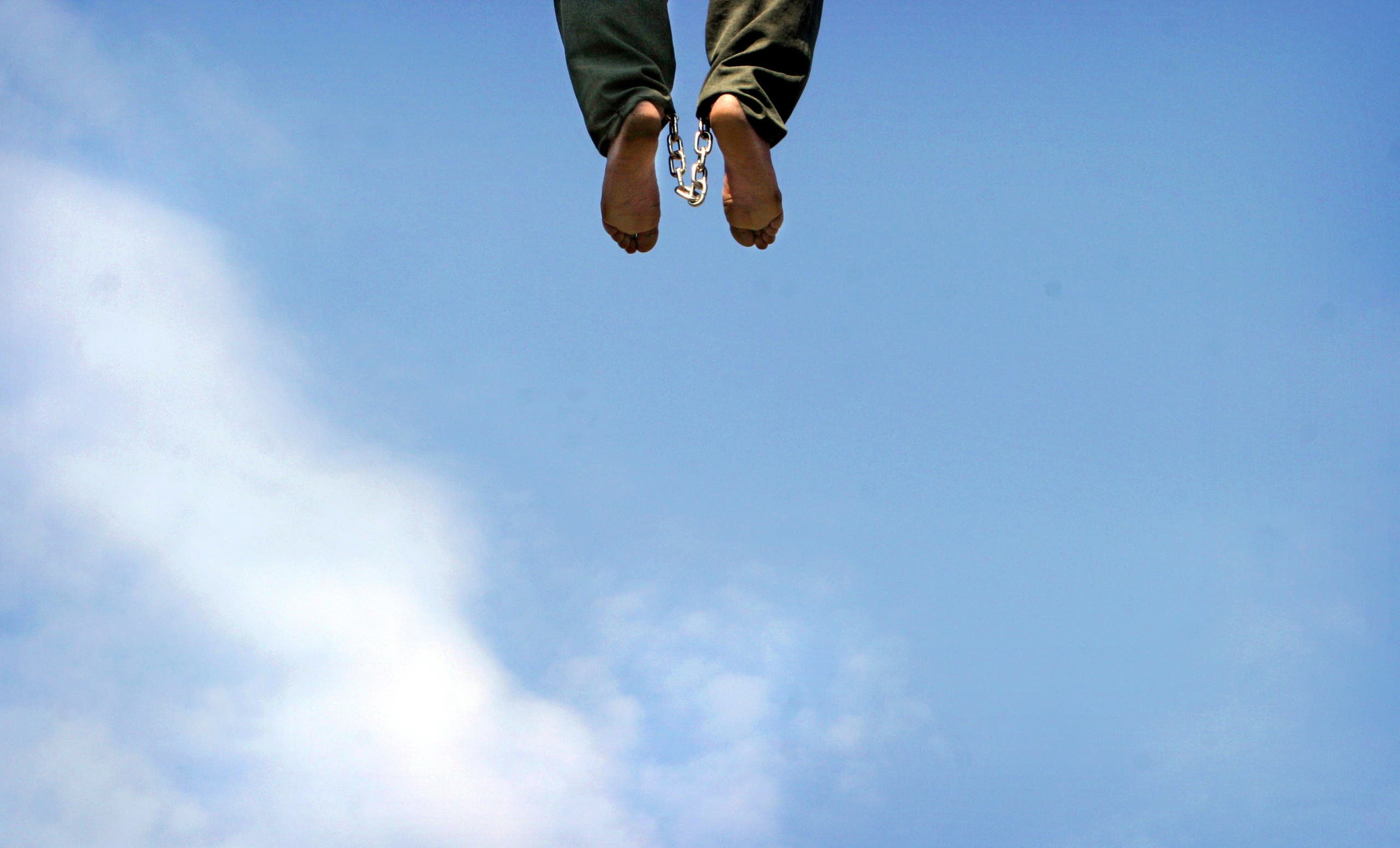
has been described as the worst crime against humanity since World War II. [1]
28 years after this genocide, the Iranian regime still refuses to acknowledge the executions, or provide any information as to how many prisoners were killed.
Based on eyewitness accounts of survivors, the massacre had been prepared for from at least a year before. The order for the massacre came from Khomeini directly in the form of a religious decree (fatwa), calling for the execution of all who remained steadfast in their support for the opposition People’s Mojahedin of Iran.[2]
A so-called Amnesty Commission (better known among prisoners as the Death Commission) asked a simple question from every prisoner: do you still support the PMOI/MEK? Those who answered yes were executed, even if they had already finished serving their original sentence.[3] None of the victims had any new activities while in detention and many of them were 15 or 16 years of age at the time of original arrest and prosecution.
The executions started in the last week of July, peaking on July 28 until August 14, and continuing onto autumn and even the following year in some places.
Naturally, the vast majority of the victims were members and supporters of the PMOI/MEK, but the order extended to other groups in later stages.
Prisoners were hanged in groups, sometimes 10 to 15 at a time, and later transported out of prison by dump trucks, and buried in unmarked mass graves. There was no mercy on anyone, even young girls and pregnant women.
Khomeini’s haste to execute was so abhorrent many of his closest confidantes had doubts about it. Hossein Ali Montazeri, Khomeini’s heir apparent and the country’s second highest authority at the time, urged for leniency and a slowdown.[4]
In a book of memoirs published in December 2000, Montazeri pointed out the vicious tortures practiced especially against young girls and women before execution during the 1988 massacre.
In a famous letter to Khomeini which led to his ouster, Montazeri wrote, “If you probably insist on your decision, at least order (the three-man Death Commission) to base their rulings on unanimous vote not that of the majority. And women should also be made exceptions, especially women who have children. And finally, the execution of several thousand people in several days will backfire.”
From this letter we can understand the role and impact of women in the prisons of those days. They were firm and resilient and inspired resistance despite knowing the fact that they would have to go through the horrifying experience rape before being hanged. But they said NO to the executioners.
It has been reported that 80 percent of PMOI women detained in the Women’s Ward 3 of Evin Prison had been massacred by September 1988. They included Monireh Rajavi, who had two small daughters and was executed only because she was the sister of the Iranian Resistance’s Leader Massoud Rajavi. There was also Ashraf Ahmadi, a political prisoner from the Shah’s time, with four children. The victims also included a wide range of people from various professions, including PMOI’s female candidates for parliamentary elections Fatemeh Zare’ii from Shiraz, and Zohreh Ainol-Yagheen from Isfahan. Dr. Hamideh Sayyahi and Dr. Shourangiz Karimian, along with her sister, and National Volleyball Team player Forouzan Abdi were among those executed in the 1988 massacre.
An audio clip just recently released by Montazeri’s family on his website, also reveals dreadful details about the massacre of women. The tape recording from Mr. Montazeri’s meeting with members of the Death Commission, includes an example about the execution of a 15-year-old girl who had been taken to prison only two days before to break her resistant brother but since she did not denounce her executed brother, she was executed, as well.
The tape also includes reference to the execution of a pregnant woman in Isfahan.
The overall picture of the 1988 massacre is totally inadequate because the massacre was extensive, carried out in prisons all across the country. In some instances, there was not any survivor. The clerical regime dealt with every information regarding the massacre as top secret, not allowing any leaks.
So, what is known about the massacre has been extracted and pieced together from the limited number of reports by survivors and families who were called to collect the bodies of their loved ones,[5] as well as from scattered acknowledgments made by the regime’s former officials as noted in this article.
The other side of this crime against humanity is of course, the steadfastness of a generation of prisoners who did not buckle under the threat of death and defended their identity which was akin to their nation’s freedom. They thus sealed their nation’s right to freedom of choice and thought, and turned this great crime against humanity into an epical humane epitome of human grace and grit which makes every conscientious human being humble before its magnificence.
The Iranian Resistance has renewed its call for the international prosecution of all perpetrators of the 1988 massacre and crime against humanity in Iran, who are still in power and hold important positions of authority. They include Khamenei (then President under Khomeini), Rafsanjani (then acting Commander-in-chief of the Armed Forces), Rouhani (then assistant to the acting Commander-in-Chief of the Armed Forces), and members of the death commission, Mostafa Pour-Mohammadi (Minister of Justice under Hassan Rouhani), Hossein-Ali Nayyeri (head of the Supreme Disciplinary Court for Judges under Rouhani), Morteza Eshraqi (then Prosecutor), and Ebrahim Raeesi (one of the top clerics, member of the Assembly of Experts, and Khamenei’s appointed head of Astan Qods-e Razavi foundation, which is an important political and economic powerhouses funding the regime’s war efforts).


On the anniversary of the 1988 massacre of 30,000 political prisoners in Iran

On the anniversary of the 1988 massacre of 30,000 political prisoners in #Iran

https://towardfreedomwithmek.blogspot.al/

The 1988 massacre of over 30,000 political prisoners in Iran
has been described as the worst crime against humanity since World War II. [1]
28 years after this genocide, the Iranian regime still refuses to acknowledge the executions, or provide any information as to how many prisoners were killed.
Based on eyewitness accounts of survivors, the massacre had been prepared for from at least a year before. The order for the massacre came from Khomeini directly in the form of a religious decree (fatwa), calling for the execution of all who remained steadfast in their support for the opposition People’s Mojahedin of Iran.[2]
A so-called Amnesty Commission (better known among prisoners as the Death Commission) asked a simple question from every prisoner: do you still support the PMOI/MEK? Those who answered yes were executed, even if they had already finished serving their original sentence.[3] None of the victims had any new activities while in detention and many of them were 15 or 16 years of age at the time of original arrest and prosecution.
The executions started in the last week of July, peaking on July 28 until August 14, and continuing onto autumn and even the following year in some places.
Naturally, the vast majority of the victims were members and supporters of the PMOI/MEK, but the order extended to other groups in later stages.
Prisoners were hanged in groups, sometimes 10 to 15 at a time, and later transported out of prison by dump trucks, and buried in unmarked mass graves. There was no mercy on anyone, even young girls and pregnant women.
Khomeini’s haste to execute was so abhorrent many of his closest confidantes had doubts about it. Hossein Ali Montazeri, Khomeini’s heir apparent and the country’s second highest authority at the time, urged for leniency and a slowdown.[4]
In a book of memoirs published in December 2000, Montazeri pointed out the vicious tortures practiced especially against young girls and women before execution during the 1988 massacre.
In a famous letter to Khomeini which led to his ouster, Montazeri wrote, “If you probably insist on your decision, at least order (the three-man Death Commission) to base their rulings on unanimous vote not that of the majority. And women should also be made exceptions, especially women who have children. And finally, the execution of several thousand people in several days will backfire.”
From this letter we can understand the role and impact of women in the prisons of those days. They were firm and resilient and inspired resistance despite knowing the fact that they would have to go through the horrifying experience rape before being hanged. But they said NO to the executioners.
It has been reported that 80 percent of PMOI women detained in the Women’s Ward 3 of Evin Prison had been massacred by September 1988. They included Monireh Rajavi, who had two small daughters and was executed only because she was the sister of the Iranian Resistance’s Leader Massoud Rajavi. There was also Ashraf Ahmadi, a political prisoner from the Shah’s time, with four children. The victims also included a wide range of people from various professions, including PMOI’s female candidates for parliamentary elections Fatemeh Zare’ii from Shiraz, and Zohreh Ainol-Yagheen from Isfahan. Dr. Hamideh Sayyahi and Dr. Shourangiz Karimian, along with her sister, and National Volleyball Team player Forouzan Abdi were among those executed in the 1988 massacre.
An audio clip just recently released by Montazeri’s family on his website, also reveals dreadful details about the massacre of women. The tape recording from Mr. Montazeri’s meeting with members of the Death Commission, includes an example about the execution of a 15-year-old girl who had been taken to prison only two days before to break her resistant brother but since she did not denounce her executed brother, she was executed, as well.
The tape also includes reference to the execution of a pregnant woman in Isfahan.
The overall picture of the 1988 massacre is totally inadequate because the massacre was extensive, carried out in prisons all across the country. In some instances, there was not any survivor. The clerical regime dealt with every information regarding the massacre as top secret, not allowing any leaks.
So, what is known about the massacre has been extracted and pieced together from the limited number of reports by survivors and families who were called to collect the bodies of their loved ones,[5] as well as from scattered acknowledgments made by the regime’s former officials as noted in this article.
The other side of this crime against humanity is of course, the steadfastness of a generation of prisoners who did not buckle under the threat of death and defended their identity which was akin to their nation’s freedom. They thus sealed their nation’s right to freedom of choice and thought, and turned this great crime against humanity into an epical humane epitome of human grace and grit which makes every conscientious human being humble before its magnificence.
The Iranian Resistance has renewed its call for the international prosecution of all perpetrators of the 1988 massacre and crime against humanity in Iran, who are still in power and hold important positions of authority. They include Khamenei (then President under Khomeini), Rafsanjani (then acting Commander-in-chief of the Armed Forces), Rouhani (then assistant to the acting Commander-in-Chief of the Armed Forces), and members of the death commission, Mostafa Pour-Mohammadi (Minister of Justice under Hassan Rouhani), Hossein-Ali Nayyeri (head of the Supreme Disciplinary Court for Judges under Rouhani), Morteza Eshraqi (then Prosecutor), and Ebrahim Raeesi (one of the top clerics, member of the Assembly of Experts, and Khamenei’s appointed head of Astan Qods-e Razavi foundation, which is an important political and economic powerhouses funding the regime’s war efforts).
[1] A former Intelligence Ministry deputy recorded a video clip in 2008, in which he revealed that the clerical regime had massacred some 33,700 political prisoners and buried them in mass graves. According to Reza Malek, there are between 170 to 190 mass graves across the country.
[3] Khomeini assigned a three-member so-called “Amnesty Commission”, who held summary trials and actually interrogated prisoners to determine their fate.
The questions were focused on whether the inmate continued to have any allegiances to the PMOI/MEK. If the prisoners were not willing to fully collaborate with the regime against the PMOI/MEK, it was viewed as a sign of sympathy to the organization and the sentence was immediate execution.
[4] Montazeri was ousted and placed under house arrest until his death in 2009, for his protests against the massacre.   
[5] A report from Shiraz indicated: “When we the rumors of the massacres spread among the public, we referred to the prison. Executioners told us, ‘What did you expect, that we serve you sweets and candies? We killed 860 people at once in one day! Now, if you hold a funeral, we will raze down your house as well.’ “
 

Europe must not turn a blind eye to Iran’s human rights abuses

Europe must not turn a blind eye to #Iran’s human rights abuses

http://english.alarabiya.net/en/features/2017/08/04/Europe-must-not-turn-a-blind-eye-to-Iran-s-human-rights-abuses.html


Amnesty International has just published a 94-page report entitled “Caught in a web of repression: Iran’s human rights defenders under attack.” It details 45 specific instances of what the organization has described as a “vicious crackdown” coinciding with the supposedly moderate presidency of Hassan Rouhani, who begins his second term in office this week.


Repressive, theocratic regime


Executions speak to the repressive nature of the theocratic regime, which has only grown worse in the era of Rouhani, when the government is fractured between two factions, neither of which represents reform. Maryam Rajavi, the president of the leading coalition of Iranian dissidents, the National Council of Resistance of Iran, responded to the new death penalty figures by saying, “Beset by crises and fearing popular uprisings, Iran’s ruling theocracy has found no other way out but to escalate repression especially by mass and arbitrary executions.”


Naturally, being “beset by crises” and the possibility of popular overthrow, the regime is deeply fearful of this sort of pressure, which would imply Western readiness to stand behind a domestic uprising in Iran, and to aid it by making sure that Tehran is not free to carry out reprisals against dissenters as it sees fit.

Absurd claim 


Last month, Iran’s own so-called human rights monitor, Javad Larijani, made the absurd claim that the country does not hold any political prisoners. Immediately thereafter, foreign diplomats in Tehran were taken on a tour of the notorious Evin Prison, but human rights investigators were kept far away from the public relations stunt, while the diplomats were kept far away from wards that are known to house political prisoners almost exclusively.

Iranian Foreign Minister Javad Zarif has made similarly bold, easily ridiculed statements asserting the country’s innocence. But with or without the new Amnesty International report, no one with a modicum of knowledge of the Islamic Republic should ever take such claims seriously. Unfortunately, Zarif and other members of the Rouhani administration appear to be masterful at putting a friendly face on Iran’s clerical regime, even as its domestic abuses and foreign provocations continue to escalate.


Justice will only be achieved when the international community has the courage to reject Iran’s absurd, anemic denials and to instead respond with new economic and diplomatic pressure to the regime’s human rights abuses.
Struan Stevenson

This is the only explanation for the fact that some Western officials, including European Union foreign policy chief Federica Mogherini, agreed to attend this week’s re-inauguration of President Rouhani. These decisions were profoundly misguided, insofar as any Western presence at an Iranian state function presupposes that the relevant officials are turning a blind eye to human rights abuses that are not only continuing but escalating on Rouhani’s watch.

It is simply inconceivable that any of those officials are unaware of the information being shared by Amnesty and others. The most charitable explanation for their actions is that they do not hold Rouhani personally responsible for the crackdowns and are willing to offer their support to his administration in the hope that it will finally, after four years in office, begin to promote serious domestic reforms.

But if this is their thinking, it is painfully naïve. Rouhani has never been anything other than a loyal servant of the regime that tortures its citizens and imprisons them for upwards of 10 years simply for protesting previous human rights abuses. Soon after taking office in 2013 amidst the applause of Western officials, Rouhani thoroughly turned his back on human rights by appointing Mostafa Pourmohammadi, a leading figure in the 1988 massacre, as his justice minister.

Such officials must be brought to justice, lest the Iranian regime be convinced that it can get away with thousands of unlawful killings and still enjoy the presence of friendly European faces at its state functions. Justice will only be achieved when the international community has the courage to reject Iran’s absurd, anemic denials and to instead respond with new economic and diplomatic pressure to the regime’s human rights abuses.

Saturday, July 29, 2017

Two Years after Nuclear Deal, Iran Seeking Regional Dominance

Two Years after Nuclear Deal, Iran Seeking Regional Dominance

New York – July marks the second anniversary of the controversial nuclear deal between Iran and P5+1, known as the Joint Comprehensive Plan of Action (JCPOA).A deal which not only did not stop Iran’s nuclear program, but it only delayed it and at the same time provided billions of dollars to the regime to pursue its destructive policies in the region.
The Obama Administration and other advocates of the appeasement policy claimed that this agreement would bring serious changes to Iran’s behavior, including its actions in the Middle East. Two years on, it is increasingly evident that these claims, hollow and baseless on some levels, have fallen short.
The deal and the misguided policy that it influenced have emboldened Iran in many areas, especially its malign regional activities. The agreement not only failed to improve the Iranian people’s economic status, but it actually granted the Revolutionary Guards (IRGC) billions of dollars to pursue its destructive policies in the region.
After spending the billions in windfall from the nuclear deal, Iran has begun meddling with its neighboring countries. Superficially, Iran has become a regional power, but what is the reality? Is Iran truly a regional powerhouse, and is there an ulterior motive behind the involvement in other countries’ affairs?
A quick look at Iran’s modern history suggests that its current actions in the region might actually signal that it possesses less power than is thought. Since the start of their rule, the mullahs based their regime on two pillars: crushing any domestic opposition and creating crises abroad. The adoption of such polices embodies the very nature of this regime. The mullahs’ regime is a backward-minded regime belonging to the Middle Ages which opposes social liberties and developments.
The system is based on Velayat-e Faqih (custodianship of the clergy) and it places all religious and legal authority in the hands of the Supreme Leader. What this means, in both theory and in practice, is that the Ali Khamenei (like Ruhollah Khomeini before him) plays a direct role in all the country’s affairs; and no individual, group, or committee in the country has the right to question or hold him accountable.
By contrast, Iranian society is a sizable demographic of young, highly educated citizens seeking increased development and more social liberties. This regime cannot match the contemporary society’s needs and considers force and suppression to be the only methods of maintaining their grip on power.
To perpetuate the systematic and widespread suppression inside the country, the mullahs rely on external crises to divert public attention. As a result, the “export of revolution”—more precisely the “export of terrorism”—and “creating crises outside of Iran” became Tehran’s official policy. There are numerous examples of the consequences of this policy.
The Iran-Iraq war, for example, lasted eight years, leaving millions on both sides  either dead or injured, and many more displaced. Hundreds of cities and villages were destroyed, and damages were estimated at $1 trillion for Iran alone. It also contributed to the establishment of Hezbollah and general interference in Lebanon’s internal affairs, the rise of Houthis in Yemen, the ascendancy of Syrian President Bashar Al Assad and the subsequent Syrian Civil War.
Former regime Supreme Leader Ruhollah Khomeini described the war as “God’s blessing.” During the war, Tehran brutally crushed its opposition through mass executions; in the summer of 1988 alone, 30,000 political prisoners were massacred across the country. The victims were mainly members and supporters of the People’s Mujahedin Organization of Iran (PMOI-MEK).
Other international crises have served the regime in the same way. Tehran has brought carnage and suffering to thousands of innocent people in Syria, Yemen, Iraq and other Arab countries with their attempts to maintain their power.
Senior Iranian officials argue, “One reason we have been in Syria… and  Iraq, and carried out these measures, is that instead of fighting the enemy in the streets of Tehran, Kermanshah, Arak, Qum, Sanandaj and Tabriz, we have taken the fight to Deir ez-Zur, Raqqa, Aleppo, Homs and Mosul….”
Iran’s tactics and daliances in other countries affairs are not due to the nation’s inherent strength. supporting regime change is the only real policy to stand against their export of terrorism.
Change to: Iran is not a regional power and its meddling in other countries affairs is not a sign of their dominance, but on the contrary it’s a smoke screen to hide their internal instability and weakness. As a result, the only real policy to stop Iran’s export of terrorism is a change in the government and regime in Iran.
The annual Iranian Resistance gathering on July 1 clearly demonstrated how regime change is within reach. Mrs. Maryam Rajavi, President-elect of the National Council of Resistance of Iran, was the keynote speaker of the conference. She emphasized that the only way to liberate the Iranian people from religious tyranny and to establish peace and tranquility in the region is to overthrow the Velayat-e faqih (absolute clerical rule).
The overthrow of this regime is necessary, feasible and within reach, and that a democratic alternative and an organized resistance exists to topple it, she underscored.
The parties behind the democratic alternative are working to establish freedom and democracy in Iran. Their plans will bring harmony to various ethnic groups, end discord and divide between Shiites and Sunnis, and eliminate tensions between Iran and its neighbors, Mrs. Rajavi concluded.